About Giant Cell Arteritis
Giant cell arteritis (GCA) is a chronic systemic vasculitis of medium and large sized arteritis (includes aorta and its branches).
- Most common vasculitis in people >50 yo
- Incidence increases with age
- 10x more common in pts in their 80s than those in their 50s-60s
- Temporal arteritis is often a manifestation, but can also be due to an ANCA-associated vasculitis
- Medical emergency due to risk of blindness
- 40-60% of pts with GCA have polymyalgia rheumatica (PMR) symptoms, while 15-20% of patients with PMR will develop GCA
- Screening PMR patients is important!
- 17x increased risk of abdominal aortic aneurysm (AAA), thoracic aortic aneurysm (TAA)
Clinical Presentation & Diagnostic Workup
- Most common vasculitis in adults >50 yo
- Gold standard for diagnosis: temporal artery biopsy
- Ultrasound has utility, but it is operator dependent
- Evaluation includes new-onset temporal headaches, jaw claudication, scalp tenderness, vision loss, PMR symptoms (pain and morning stiffness affecting neck, shoulders, pelvic girdle)
- Elevated inflammatory markers without other explanation
- Do not always have to be present but can be a clue
Treatment
- Treatment should not be delayed for diagnostic purposes if vision loss is threatened
- Mainstay treatment: steroids
- New emerging therapies are available, such as IL-6 inhibition with tocilizumab
Monitoring
- Common to have PMR symptoms with GCA
- Need to monitor PMR patients for GCA
Incidence
- 2-3x more common in women
- Commonly reported in whites of Northern European descent
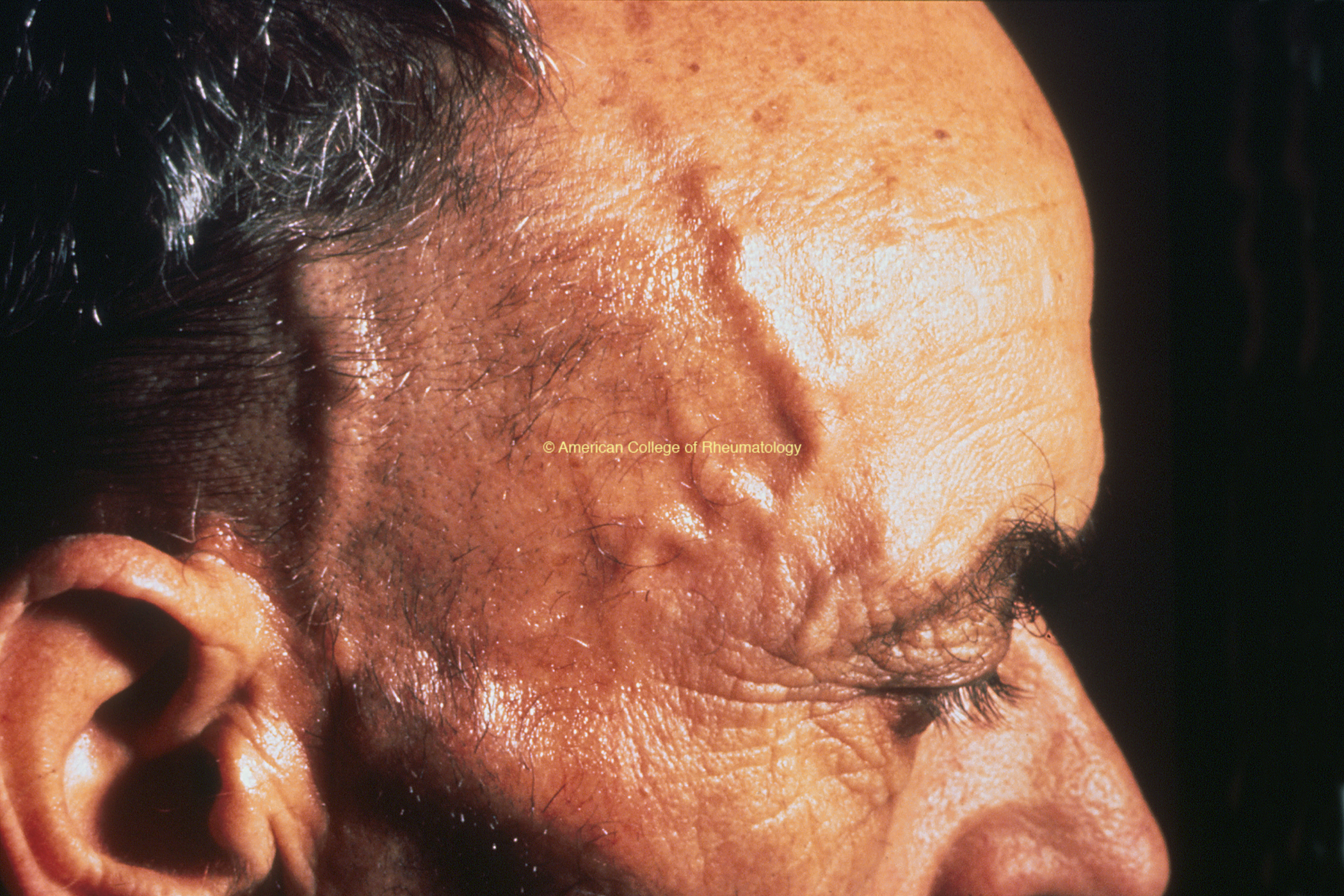
Temporal Artery Abnormalities & Scalp Tenderness
- Superficial temporal artery
- Tenderness
- Beading
- Thickening
- Can be pulsatile (view image)
Constitutional Symptoms
- Weight loss
- Low grade fever
- Fatigue
- Night sweats
Visual Symptoms
- Amaurosis fugax (transient vision loss)
- Acute visual loss
- Visual loss occurs in 15% of patients (MC due to ischemic neuritis)
- Blindness is abrupt and painless
- Diplopia
PMR Symptoms
- Pain and morning stiffness
- Affecting the neck, shoulders, and pelvic girdle
Other
- Bruits in axilla, reduced BP in upper limbs
- Jaw and/or tongue claudication, limb claudication
- Elevated CRP and ESR without other reasons such as infection, malignancy
Biopsy
- Temporal artery biopsy is gold standard
- Biopsy often shows findings of arteritis even after more than 14 days of steroid therapy
- Ideally obtained within 7 days of starting steroids
Imaging
- U/s of temporal artery, however dependent on skill of ultrasonographer
- Can consider CT, PET, or MRI for aorta and extracranial arteries
- Steroids should not alter imaging if done within 1-2 weeks of treatment
Lab Workup
- ESR, CRP, or other nonspecific markers of inflammation
- Other vasculitides
- Takayasu arteritis
- Also affects aorta and primary branches, but typically under 40 yo and F
- Granulomatosis with polyangiitis (GPA)
- Polyarteritis nodosa (PAN)
- Microscopic polyangiitis (MPA)
- Takayasu arteritis
- Intracranial pathology, lesions
- Other causes of headache
- Other causes of vision loss
- Malignancies (especially with elevated inflammatory markers)
Glucocorticoid Therapy
- Initial dosing 1 mg/kg daily in divided doses
- Do not delay by waiting to confirm by biopsy or imaging if clinical suspicion is high, especially in the setting of threatened or acute vision loss
- If threat of acute visual loss at diagnosis, should be treated with pulse IV glucocorticoids (methylprednisolone 1 g daily X3 days)
- High dose therapy is usually continued for 1 month or until ESR/CRP normalize and then is tapered slowly
- Taper can last 6 months-2 years
Aspirin
- Low dose aspirin (81 mg/day) should be used in all GCA pts to reduce cardiovascular risk and blindness
Adjunctive Immunosuppressive Therapy
- Adjunctive immunosuppressive therapy with tocilizumab (IL-6 inhibitor)
- Give tocilizumab to pts with refractory or relapsing disease with difficulty tapering off glucocorticoids or to those with increased risk of glucocorticoid-related adverse effects
- Need to consider bone protection due to long-term steroid use (bisphosphonate)
- Regular follow-up every 3 months
- Monitor based on symptoms:
- Worsening headaches
- Increased temporal artery tenderness
- Scalp tenderness
- Jaw/tongue claudication
- PMR symptoms
- Monitor for signs of AAA or TAA
- Needs to be urgently evaluated in a GCA patient
- Yearly abdominal ultrasound should be considered
- Monitor with ESR and CRP (which should decrease and normalize with treatment)